
[ad_1]
 American Airlines has finally joined the party, announcing that it will be offering free in-flight Wi-Fi to its passengers from today. The service will be available free to its AAdvantage loyalty program members, who will be able to use high-speed, satellite-based Wi-Fi across more than 2 million American Airlines flights this year. The airline is rolling out the offering in a partnership with AT&T.
However, the offering is rolling out in phases, and there will be some significant gaps in the service. Notably, passengers traveling aboard most of American Airlines’ long-haul widebodies will still have to pay for Wi-Fi for months to come. This is due to those aircraft still being fitted with older Wi-Fi technology that is unable to adequately support a free Wi-Fi service.
How The New Free Wi-Fi Service Will Work

American Airlines is late to the free Wi-Fi game.  Delta Air Lines was the first legacy US airline to introduce free Wi-Fi for its SkyMiles members in February 2023 after conducting extensive testing.
  United Airlines followed in May last year when it began offering free Wi-Fi for MileagePlus members via Starlink satellite internet on its aircraft, starting with its regional jets.
The new service from American Airlines is very similar to its peers, being made available to AAdvantage members as free Wi-Fi is being used as a tool to drive customer loyalty. The airline will be rolling it out in phases, starting this week with the mainline domestic fleet (such as its Boeing 737s and Airbus A320-family aircraft) and approximately 500 dual-class American Eagle regional jets. Wi-Fi will be free on 100% of these aircraft by the end of this month, the airline says.
Heather Garboden, American’s chief customer officer, says that high-speed connectivity has now become essential for US airline passengers, and the airline will be offering free Wi-Fi on more aircraft than any other carrier in the world:
“As we celebrate 100 years of delivering industry firsts, including the first loyalty program and first airport lounge, we’re setting the standard for connectivity in the skies. Free high-speed Wi-Fi isn’t just a perk — it’s essential for today’s travelers. That’s why we’re proud to begin rolling out this new offering, across the majority of our fleet.”
But You Still Pay On Some AA Flights

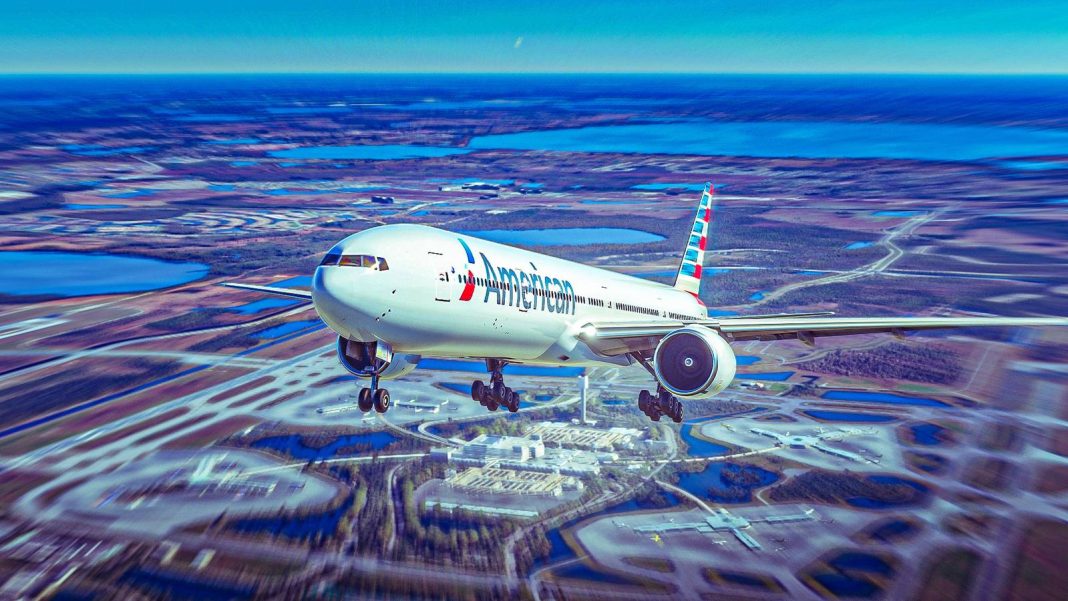
However, “the majority” of the fleet does not mean all aircraft, at least for now. While domestic travelers on narrowbody aircraft will notice an almost immediate change, long-haul passengers will not. For the next few months at least, passengers aboard American’s Boeing 777 aircraft and the vast majority of its Boeing 787 fleet will still be required to pay for Wi-Fi, ranging from $19 to $35 for a full-flight pass. In total, this represents more than 130 aircraft in the American Airlines fleet.
|
The Widebody Aircraft With Older Panasonic Systems |
||
|
Aircraft Type |
Number In Fleet |
Average Age (Years) |
|
Boeing 777-200 |
47 |
25.1 |
|
Boeing 777-300ER |
20 |
11.9 |
|
Boeing 777-8 |
37 |
7.7 |
|
Boeing 777-9 |
33 |
5.7 |
The reason for this discrepancy is that American is using the high-capacity Ka-band satellites used by Viasat for its domestic narrowbodies, which allow sufficient bandwidth for all passengers to be browsing or streaming on the flight. However, most of American’s widebody fleet still utilize legacy Panasonic Avionics satellite systems for Wi-Fi. These older Ku-band systems lack the bandwidth to support hundreds of passengers streaming simultaneously, and providing free access on a 777-300ER with 300+ passengers would likely crash the network, leading to a poor user experience.
American Airlines does have a limited number of retrofitted 787s that have the newer Viasat technology, and all new 787s will come with Viasat pre-installed. The airline also has plans to upgrade the tech on its existing widebodies, saying “we are actively working to offer free Wi-Fi across 100% of our fleet,” but this will obviously take time with more than a hundred aircraft requiring the change. For the immediate future though, most 777 and 787 passengers will still be stuck paying for Wi-Fi.

How American Airlines Is Reinventing The Airline Travel Experience
The airline has introduced a series of digital tools and service updates that are designed to enhance how customers plan, check in, and experience.
How Free Wi-Fi Is Shaping Out In The US

Free in-flight Wi-Fi in the US was originally pioneered by JetBlue, which first launched it all the way back in 2013. Today, its “Fly-Fi” service uses Viasat technology, and it remains the only US carrier with completely free Wi-Fi on all flights without the requirement of being a loyalty program member. The carrier also recently announced that it will be the first airline to use Amazon’s Project Kuiper satellite network to power its Wi-Fi from 2027 onward.
Free Wi-Fi has also become standard across the other large US carriers:
-
Delta Air Lines: Offers free Viasat-powered Wi-Fi to all
SkyMiles
members across its entire domestic and nearly all its international fleet, in partnership with T-Mobile. Last month it announced that it had equipped its 1000th aircraft with free Wi-Fi and its Delta Sync in-flight entertainment system. -
United Airlines: Utilizing Starlink’s low-earth orbit (LEO) satellites, United provides free, ultra-low latency Wi-Fi to
MileagePlus
members. Being a newer technology, United is still rolling out the Starlink service across its fleet, and it will only be fleet-wide by the end of the year. -
Southwest Airlines: The Dallas-based carrier launched free Wi-Fi for members of its
Rapid Rewards
loyalty program in October last year. However, the majority of its fleet still uses older Anuvu (Ku-band) technology, and many users report spotty or unreliable performance. The carrier is in the process of upgrading aircraft to Viasat.
American’s announcement today certainly narrows the gap to its competitors, but until its widebody fleet is upgraded, it remains one step behind Delta and United in the race for a truly “gate-to-gate, across-the-globe” free internet experience. For now, the domestic traveler wins, while the international road warrior should still keep their company credit card handy.
[ad_2]
Source link