
[ad_1]
More than half a century after Apollo 11 changed the course of human history, Neil Armstrong and Buzz Aldrin once sat together and reflected on the mission that carried them to the Moon and back.
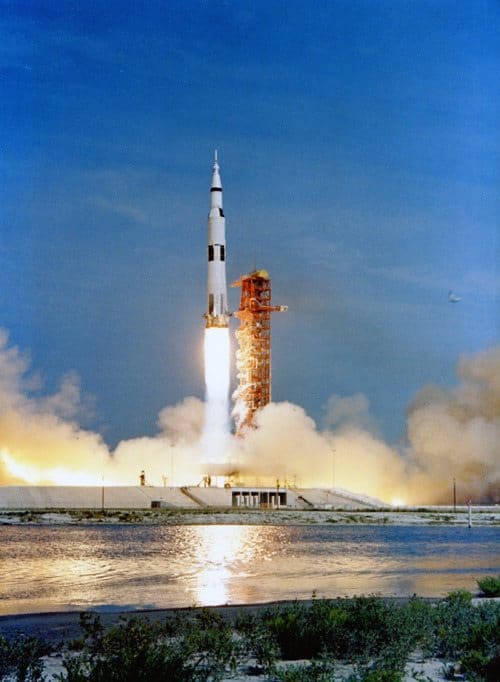
The first mission to land people on another world blasted off from Cape Canaveral on 16 July 1969, hurtling three men 250,000 miles atop the largest operational rocket the world has ever known – the Saturn V.
Neil Armstrong and Buzz Aldrin would land on the moon several days later, while Michael Collins orbited overhead in the command module. Together, they forever cemented both the mission and their places in human history.
The Apollo program ended in 1972, but its influence never faded. The lessons learned from Saturn V launches, lunar navigation, life support systems, and deep space operations still shape modern spacecraft design. Apollo proved the Moon was reachable. What came after required patience, new technology, and a different kind of planning.
The next chapter is now right on our doorstep.
Artemis and the Return to Deep Space
NASA’s current human spaceflight effort is the Artemis program. Unlike Apollo, Artemis is designed as a long-term architecture rather than a short sprint. The goal is to establish sustained human presence at the Moon and use it as a proving ground for missions deeper into the solar system.
The first uncrewed test flight, Artemis I, flew successfully in late 2022, sending the Orion spacecraft around the Moon and safely back to Earth. The next step is far more personal.

Artemis II is the Next Giant Test
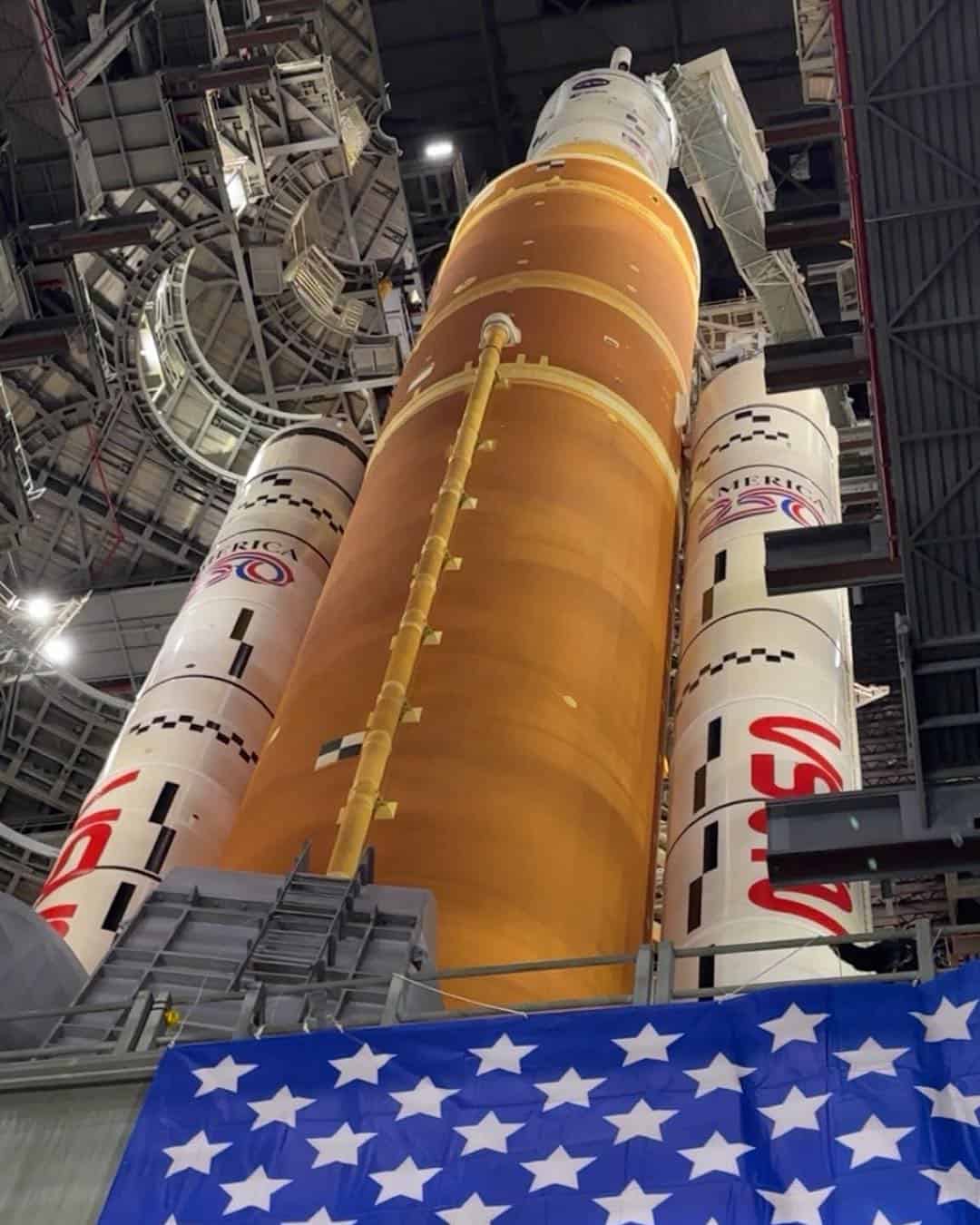
Artemis II will be NASA’s first crewed mission beyond low Earth orbit since Apollo 17. The mission will send four astronauts aboard the Orion spacecraft on a roughly ten-day journey around the Moon before returning to Earth.
NASA rolled out Artemis II to the launch pad on 17 January, aiming to send four astronauts on a 10-day mission to the moon and back as soon as 6 February 2026.
The crew includes:
- Reid Wiseman, mission commander
- Victor Glover, pilot
- Christina Koch, mission specialist
- Jeremy Hansen of the Canadian Space Agency, mission specialist
Artemis II will not land on the Moon. Its purpose is validation. Life support systems. Communications. Navigation. Heat shield performance. Crew operations in deep space. Everything that must work before humans attempt another lunar landing.
And, talk about a full-circle moment: Artemis II’s journey to the pad took place aboard NASA’s crawler-transporter CT-2, the very same machine that carried Buzz Aldrin’s Saturn V rocket to the launch pad in 1969. More than fifty years apart, the same steel crawler traced the same slow path from the Vehicle Assembly Building toward history.
In terms of distance from Earth, Artemis II will take astronauts farther than any human has traveled in more than half a century.
The Road to Mars
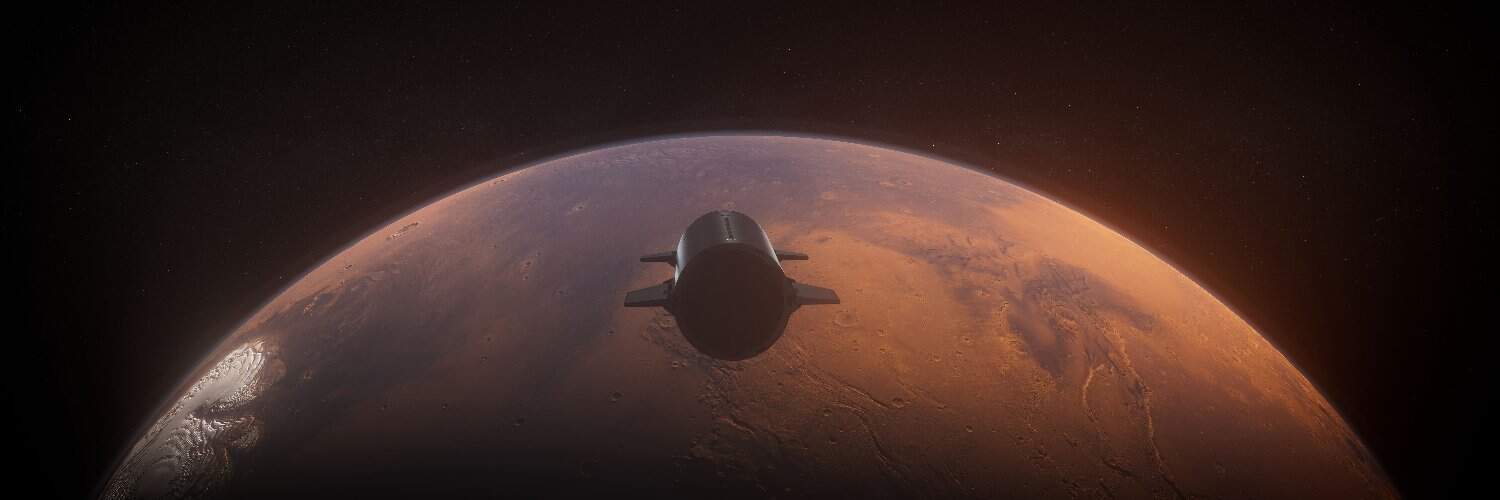
Even as Artemis II sets its sights on the Moon, plans for sending humans to Mars continue to take shape. NASA’s current timeline places the first crewed missions to Mars no earlier than the 2030s, though no firm launch date has been set.
That uncertainty reflects the scale of the challenge. Before humans can set foot on Mars, NASA must demonstrate:
- Long-duration life support systems that can operate reliably for years
- Deep space propulsion capable of moving large crews and cargo
- Entry, descent, and landing systems for Mars’ thin atmosphere
- Surface habitats and ascent vehicles for the return journey
The Artemis missions, and indeed the Moon itself, are the testbed for all of it.
From Apollo to Artemis
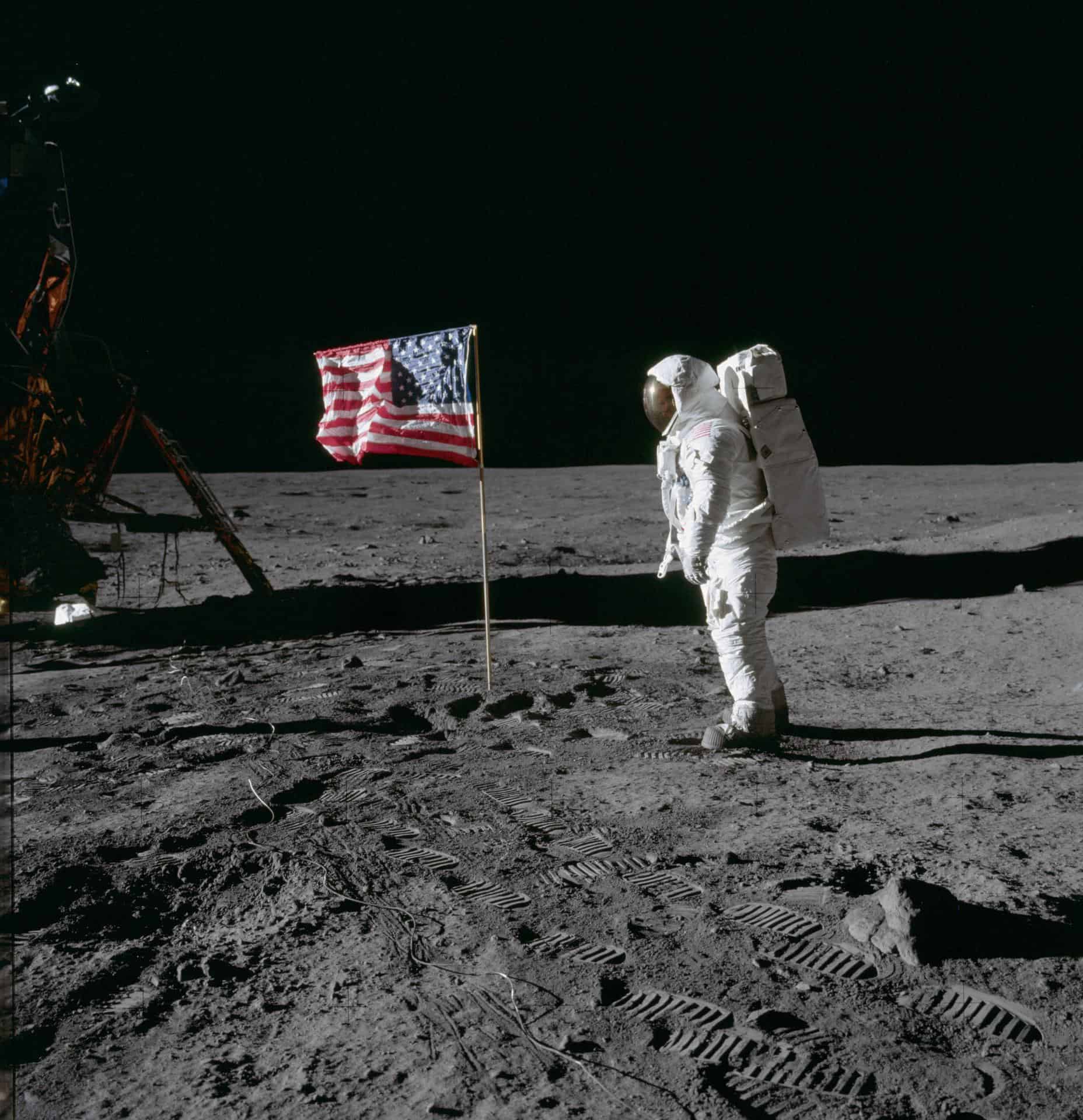
When Neil Armstrong and Buzz Aldrin reflected on Apollo 11, they were looking backward at a moment that reshaped history.
In the weeks ahead, a new chapter of spaceflight history is set to begin. Artemis looks forward with the same spirit that drove Apollo and the American heroes who made it possible.
And you can bet that AvGeekery will be there to tell the story!
EDITOR’S NOTE: This article was originally published on 16 July 2017. It was updated on 20 January 2026 with the latest information on NASA’s Artemis program.
Follow Mike Killian on Instagram and Facebook, @MikeKillianPhotography
.
[ad_2]
Source link