[ad_1]
The new Air Force One livery is back after being rejected in 2022. The VC-25B and other executive aircraft will now wear the red, white, and dark blue design.
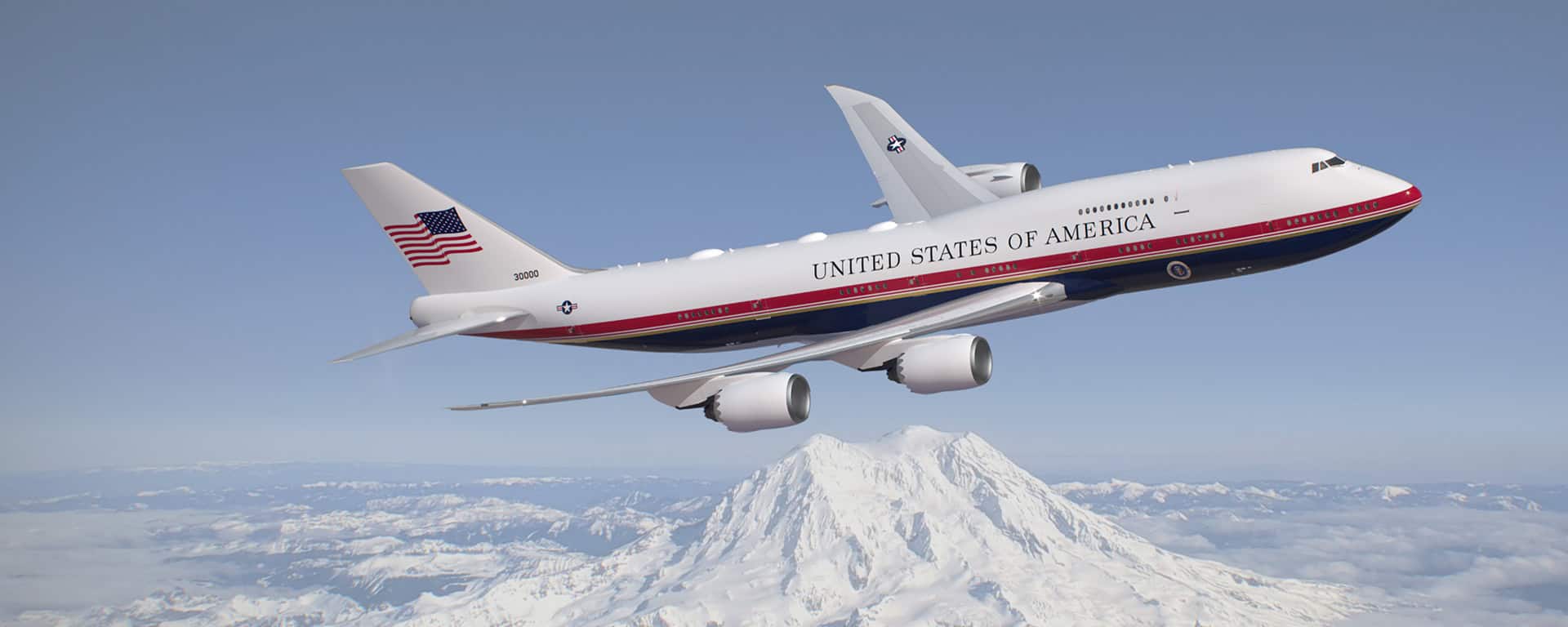
The US Air Force has confirmed that the next generation of presidential aircraft will wear a red, white, dark blue, and gold paint scheme first proposed during President Donald Trump’s initial term in office. The decision marks a reversal of a 2022 decision to shelve that same design due to cost and engineering concerns.
The new livery will appear on the pair of Boeing 747-8 aircraft designated VC-25B, which are currently undergoing extensive modification to replace the aging VC-25A fleet. It will also be applied to other executive airlift aircraft, including a 747-8i recently transferred from Qatar for conversion and four Boeing 757-based C-32 aircraft during scheduled maintenance cycles. Eagle-eyed spotters have taken to social media this week, posting images of the updated livery on at least one of the C-32s.
An Air Force spokesperson told multiple outlets that the service is “implementing a new paint scheme requirement” for the VC-25B and portions of the executive airlift fleet, specifying the red, white, gold, and dark blue palette. The first repainted C-32 is expected to return to service in the coming months.
The look itself is familiar to anyone who followed the Air Force One redesign debate in 2018 and 2019. At the time, President Trump publicly described his vision for a “red, white, and blue” aircraft that would be “top of the line.” Renderings released during his first term showed a darker blue underside, bold red accents, and gold striping, a sharp visual departure from the pale blue scheme that has defined Air Force One since the early 1960s.
That classic design, created during President John F. Kennedy’s administration with the input of industrial designer Raymond Loewy, has remained largely unchanged for more than six decades. Its robin’s egg blue cheatline and restrained typography became part of the aircraft’s global identity, recognizable on every continent.
Why It Was Scrapped in 2022
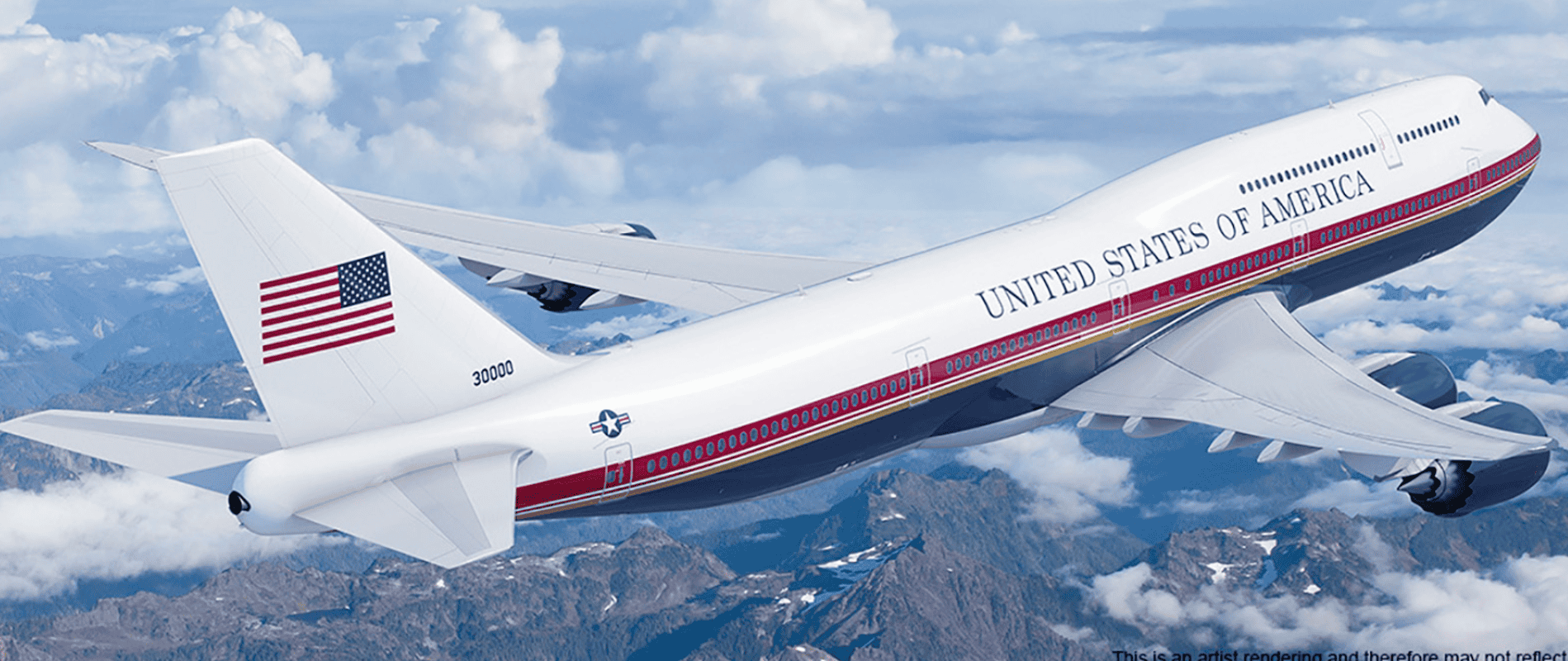
In 2022, the Air Force announced it would not move forward with the darker color scheme. A spokesperson at the time said further analysis found that deeper hues on portions of the aircraft could lead to higher surface temperatures, potentially exceeding certification limits for certain components. Officials also cited added engineering work, schedule impacts, and cost considerations as factors in the decision.
New renderings unveiled in 2023 reflected a revised approach that closely resembled the Kennedy-era livery, albeit with subtle updates to the shade of blue.
Now, following President Trump’s return to office, the Air Force has reversed course once again. The service has not publicly detailed how earlier thermal or cost concerns were mitigated, but it has confirmed that the red, white, gold, and dark blue scheme will be applied to the VC-25B fleet and select C-32 aircraft.
The back-and-forth highlights how even a paint scheme on a highly specialized aircraft is subject to engineering realities. Modern executive airlift jets are packed with antennas, hardened electronics, and mission systems. Surface coatings are not merely aesthetic. They can influence thermal performance, radar signature considerations, and long-term maintenance cycles.
A Fleet-Wide Shift
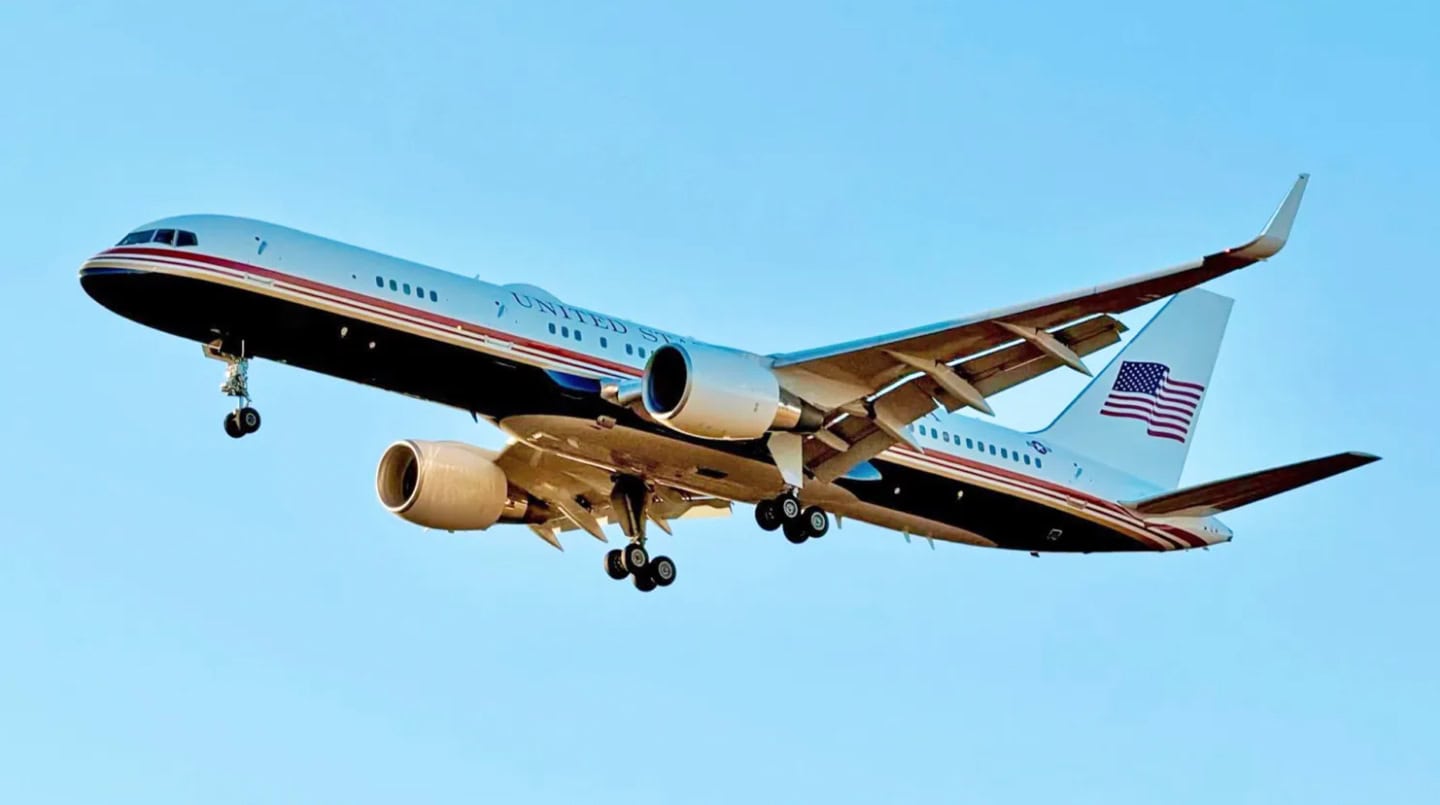
The new Air Force One livery is not limited to the future Air Force One jets.
One C-32A, serial number 99-0003, was recently spotted at Majors Airport in Greenville, Texas, wearing the new livery after work at L3Harris’ Mission Integration facility (the same facility where the ex-Qatari 747 is undergoing modifications). The aircraft had arrived in late 2025 in its traditional white-over-blue scheme and was later seen stripped of paint before reemerging in the updated colors. The jet carries a large American flag on the tail and prominent “United States of America” titling along the fuselage.
The Air Force operates eight C-32As, commonly referred to as Air Force Two when transporting the Vice President, though they are also used by the President, cabinet officials, and senior diplomats. According to the service, four of these aircraft will receive the new paint during regularly scheduled depot maintenance.
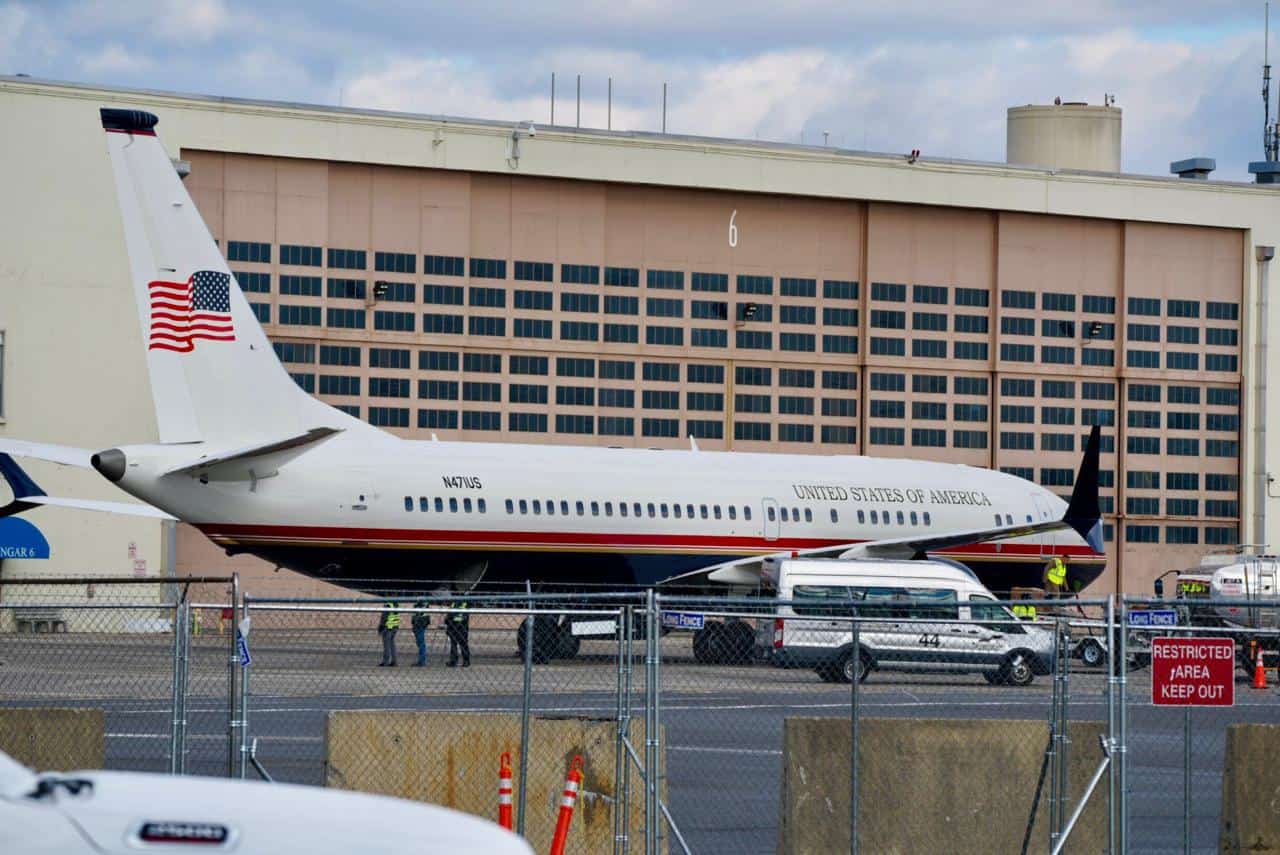
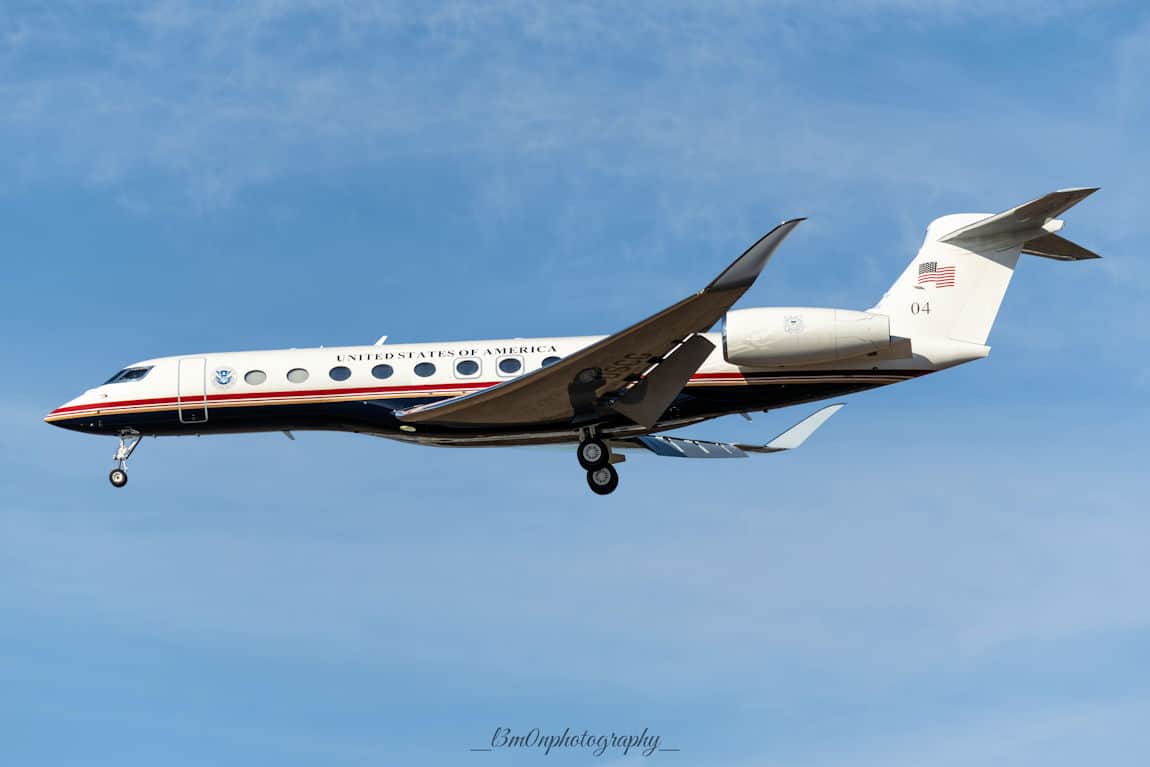
Elsewhere in the federal fleet, similar red, white, and dark blue schemes have appeared on a Department of Homeland Security Boeing Business Jet and on new Gulfstream 700 aircraft delivered to the US Coast Guard for long-range command and control missions.
Taken together, the visual transformation suggests an emerging standardization across executive airlift platforms, at least for the foreseeable future.
More Than Just Paint
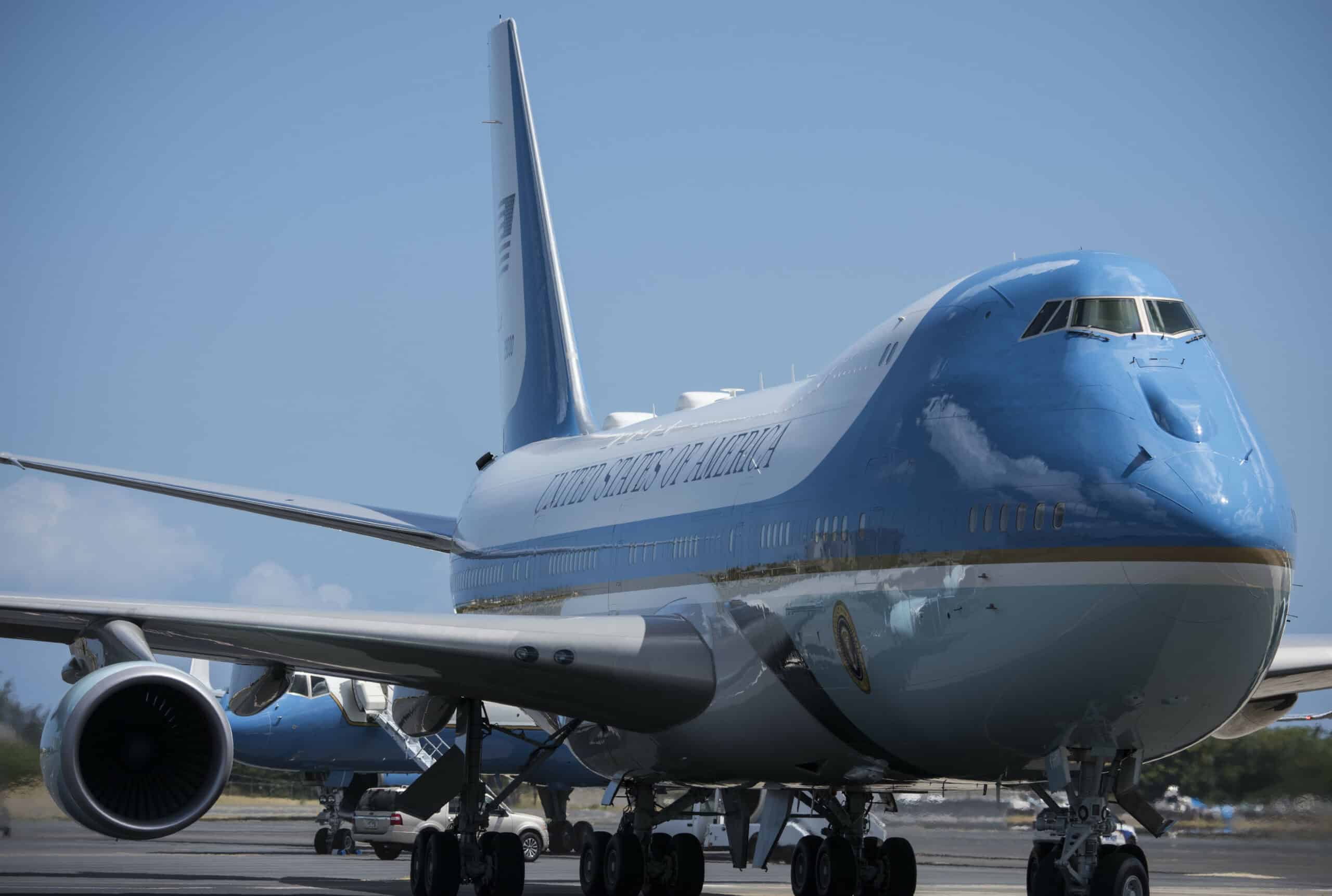
Technically, “Air Force One” is a call sign used for any Air Force aircraft carrying the President. In practice, it has come to refer to the two VC-25A aircraft, tail numbers 28000 and 29000, that have served since 1990. Those jets are based on the Boeing 747-200B and are operated by the Presidential Airlift Group at Joint Base Andrews.
Their successors, the VC-25B aircraft based on the 747-8i, are being extensively modified with secure communications, defensive systems, and mission equipment that allow them to function as airborne command centers. The Air Force has also acquired additional 747 airframes for training and spare parts support as the long-delayed program moves forward.
Whether in pale blue or dark navy, the aircraft that carries the President remains one of the most recognizable symbols of American airpower and continuity of government. Its appearance is instantly identifiable, from the presidential seal near the nose to the bold “United States of America” script along the fuselage.
MORE ABOUT AIR FORCE ONE ON AVGEEKERY
The reinstated livery decision adds another chapter to the long visual history of presidential flight. From the propeller-driven VC-54 “Sacred Cow” of the 1940s to today’s 747s and tomorrow’s VC-25Bs, the mission has remained constant even as the paint evolves.
As political tides shift, so too may opinions about how America’s most recognizable aircraft should look. Few in the aviation community (and beyond) would welcome an endless repaint cycle. Whatever colors ultimately prevail, the jet that flies under the Air Force One call sign will continue to embody the office it serves, from Joint Base Andrews to the farthest corners of the globe.
[ad_2]
Source link