
[ad_1]
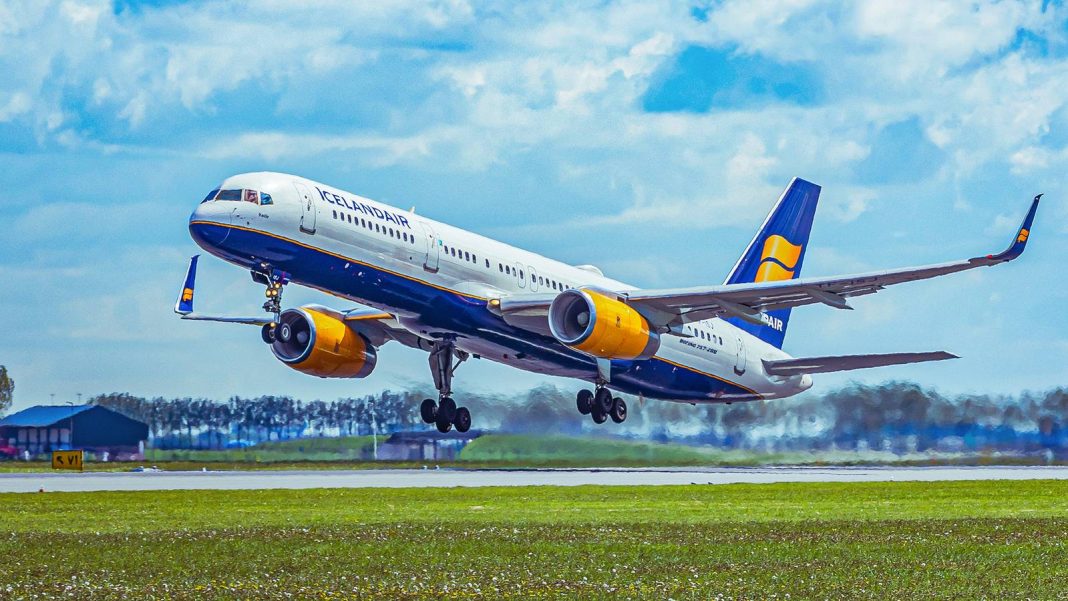
The Boeing 757 has long held a special place in the aviation community. Its sleek design and versatility have been admired by pilots, airlines, and avgeeks alike since its entry into service in 1983 with Eastern Air Lines. But more specifically, the 757 is widely admired for its impressive climb performance. Some enthusiasts have even claimed that, under certain conditions, a 757 could outclimb some fighter jets, a statement that raises eyebrows given the speed and maneuverability of military aircraft.
While such a claim is a little outlandish, it highlights the unique combination of thrust, weight, and aerodynamics that makes the 757 one of the most capable narrowbody airliners ever built. It has earned its reputation over the years for good reason and is certainly one of the more exciting aircraft to fly for pilots. This article will offer an introduction to climb rate, and compare performance between the 757 and past and present fighter jets.
Understanding Climb Rate

Climb rate is a fundamental measure of aircraft performance, indicating how quickly it can gain altitude over time. Climb rate is usually expressed in feet per minute (fpm), and is largely determined by the thrust-to-weight ratio, which compares the engine’s power to the aircraft’s overall weight. Both thrust and weight are forces that act on an aircraft. The thrust vector of an aircraft is always pointed straight out from the nose of the aircraft. This means that during a climb, when the aircraft has a positive angle of attack, the thrust vector is pointed upwards relative to the horizon and has an upward component. The weight vector, on the other hand, always points straight down in all phases of flight. Thus, in a climb, thrust and weight work against each other. A higher thrust-to-weight ratio generally allows an aircraft to ascend faster, since this means the thrust force is stronger than the weight force. This ratio is often expressed as a number found by dividing the total thrust by the total weight. The other aerodynamic forces, lift and drag, as well as factors like wing shape and surface area, also influence how efficiently the plane can climb.
Weight distribution and fuel load can significantly affect climb performance, too. A heavily loaded aircraft will naturally climb more slowly than a lighter one, even with the same engines, while removing excess weight can improve vertical speed noticeably. Environmental conditions, such as temperature, air pressure, and altitude, also play a critical role. Thin air at higher altitudes reduces engine performance and lift, meaning climb rates achievable at sea level are often much higher than what an aircraft can sustain as it gains altitude. This is why every aircraft has a service ceiling; there is ultimately a point at which an aircraft can not climb further.
For commercial airliners like the Boeing 757, climb performance is optimized for efficiency and passenger comfort rather than raw speed. Pilots aim for a steady, safe ascent that balances fuel consumption with regulatory requirements and air traffic control restrictions. Typical climb rates for airliner operations usually range from 1,000-2,000 fpm. Understanding how climb rate works provides the context needed to compare 757 and fighter jet performance numbers.
The 757 Engine

At the heart of the Boeing 757’s impressive performance is its engines, which give the aircraft a thrust-to-weight ratio unusually high for a commercial airliner. Depending on the model and airline configuration, the 757 is powered by either Rolls-Royce RB211-535 or Pratt & Whitney PW2000 engines. Both engines are capable of producing large amounts of thrust, providing the raw power that allows the plane to accelerate quickly, take off from shorter runways, and climb steeply. The RB211 is a popular engine family that powers many different aircraft. Notably, the 747-400 also had RB211 engines. Similarly, the PW2000 also has applications beyond the 757. Known also as the F117, this engine is installed on the C-17 Globemaster and VIP-configured C-32A of the United States Air Force.
Both engine options on the 757 are designed for efficiency and reliability, but it is each engine’s thrust that gives the 757 its edge in climb performance. With a relatively narrow fuselage and a clean, aerodynamic wing design, the engines can convert power into a high rate of ascent, especially when the aircraft is lightly loaded. Pilots often note that the combination of thrust and agility makes the 757 feel noticeably more responsive than other jets in its class.
|
757 Engine Options Comparison |
||
|---|---|---|
|
RB211-535 |
PW2000 |
|
|
Length (inches) |
198.2 |
146.8 |
|
Diameter (inches) |
74.1 |
78.5 |
|
Max. thrust (pounds-force) |
42,540 |
38,400–43,734 |
|
Overall pressure ratio |
25:1 |
27.6-31.2:1 |
|
Bypass ratio |
4.4:1 |
6:1 |
|
Thrust-to-weight ratio |
5.21 |
5.41-6.16 |
Source: UK Civil Aviation Authority, FAA
Both engines are very similar and help the 757 achieve its performance numbers. Engine performance also plays a key role in unusual operating conditions, such as high-altitude airports or hot-weather takeoffs, where thinner air reduces lift and engine efficiency. In these situations, the RB211-535 and PW2000 engines help the 757 maintain impressive climb rates that are for a commercial jet.

Why Did Boeing Build The 757 With 2 Engine Different Types?
A look at the engine selection for the iconic Boeing 757 and how this area of airliner design has changed compared to today.
757 Performance Specs

Thanks to its powerful engines, the 757 boasts some impressive performance specifications. The table below highlights some key performance figures of the Boeing 757-200. Production of the 757 ended in 2004, so these numbers represent an older era of commercial aviation. For example, newer airliners cruise slightly faster, and many newer narrowbody aircraft can fly further. However, the 757 has an exceptional climb rate capability, with a standard climb out rate of 3,200 fpm. In certain scenarios, the aircraft can touch nearly 4,000 fpm if flying with few-to-no passengers and a light fuel load.
|
757-200 Performance Overview |
|
|---|---|
|
Metric |
Value |
|
Max. takeoff weight (pounds) |
255,000 |
|
Max. payload weight (pounds) |
57,160 |
|
Operating empty weight (pounds) |
128,840 |
|
Fuel capacity (US gallons) |
11,489 |
|
Cruise Mach |
0.80 |
|
Range (nautical miles) |
3,915 |
|
Climb rate (fpm) |
3,200–4,000 |
|
Thrust-to-weight ratio at MTOW |
0.34 |
Source: Boeing
The last metric presented is the thrust-to-weight ratio at maximum takeoff weight (MTOW). This number was calculated by taking the maximum thrust of the PW2000 engine and multiplying it by two to represent the total thrust available for the 757-200, since there are two engines on each aircraft. Then, that number is divided by the MTOW of 255,000 pounds to result in a thrust-to-weight ratio of 0.34 in that configuration. This may seem low, but compared to other commercial airliners, it is quite impressive. For instance, the Boeing 777-200ER has a thrust-to-weight ratio of 0.285 at full power, and the Airbus A320neo has one of 0.31 in the same conditions. This demonstrates the unique capabilities of the 757.
Fighter Jet Basics

Fighter jets are designed with a completely different set of priorities than commercial airliners, which makes direct comparisons to a plane like the Boeing 757 interesting but complex. The key to a fighter jet’s performance is its thrust-to-weight ratio, not dissimilar to commercial airliners. However, this number is often well above 1 when the jet is lightly loaded, allowing it to climb nearly vertically. Fighter jets also benefit from afterburners, which temporarily boost engine thrust at the cost of fuel efficiency.
Other factors that influence a fighter jet’s climb include wing design, control surfaces, and flight systems. Swept or delta wings allow jets to handle high speeds and supersonic flight, while advanced avionics help manage energy and optimize ascent rates. Climb performance can vary dramatically depending on fuel load, weaponry, and mission configuration. The fundamentals of climb rate and general performance are the same between fighter jets and commercial airliners. However, fighter jets are much smaller and are often overpowered to enable high maneuverability, a flight characteristic that commercial airliners simply do not require.
Because of these design differences, fighter jets typically achieve climb rates far higher than commercial planes under standard conditions. They are designed to climb quickly, maneuver sharply, and operate with minimal weight, which gives them a huge advantage over commercial airliners in almost any scenario. Then again, climb performance is highly variable. There are certainly situations where a 757 can be better in a climb segment than a fighter jet.

We Flew On A 33-Year-Old Delta Air Lines Boeing 757-200: Here’s How It Went…
The aircraft’s modern and clean interior remarkably contradicts its age.
Comparing Climb Performance

The climb rate comparison between a 757 and fighter jets is not really a competition, especially when considering the maximum climb rates of fighter jets. Nevertheless, the table below compares the climb rate of the 757 to that of popular fighter jets. The extreme climb rate capability of the fighters is not a sustainable rate for an entire flight, though. Often, a jet will only perform such drastic climbs on takeoff or during air-to-air combat. Such maneuvers are not fuel-efficient but are a good way of gaining energy, which is important for fighters (energy maneuverability theory).
|
Climb Rate Comparison |
|
|---|---|
|
Aircraft |
Max. Climb Rate (fpm) |
|
757-200/300 |
4,000 |
|
F-22 Raptor |
62,000 |
|
F/A-18 Hornet |
50,000 |
|
F-35 Lightning |
45,000 |
Source: AeroTime
Under very specific circumstances, such as a heavily loaded jet and an ultra-light 757 on a short takeoff, there are scenarios where the 757’s steady, high-thrust engines may allow it to keep pace with or temporarily outclimb some fighter jets in the very initial ascent. In fact, the 757 is perhaps the only airliner flying today that is approved for unrestricted climbs by ATC, and numerous stories of pilots who have flown these climbs or similar zoom climbs comment on how thrilling it is. But ultimately, the takeaway is that while the 757’s climb performance is impressive for a commercial airliner, it does not rival that of modern fighter jets.
The 757 Experience

Flying a Boeing 757 leaves a lasting impression on pilots and aviation enthusiasts alike, and much of that comes from its unusual combination of power and agility. Even fully loaded with passengers and fuel, the 757 can accelerate and climb more sharply than most other commercial jets in its class, giving pilots a sense of control and responsiveness that is rare in narrowbody airliners. While the 757 is no match for a fighter jet in sustained vertical performance, the experience of commanding such a capable airliner can feel exhilarating. Pilots often note that the engines respond quickly, the aircraft handles crisply, and the climb rates feel unusually steep compared to other airliners. These qualities help explain why the 757 continues to inspire awe decades after it first entered service.
[ad_2]
Source link